
As part of my Master’s program for ENG 561, this series of blog posts aims to define media literacy and its importance, prepare teachers to incorporate its principles into their curriculum, ensure students are equipped with the tools to benefit from it, and explain how universities can increase their recruitment and retention efforts through increased digital media awareness.
The National Association for Media Literacy Education (NAMLE) defines media literacy as “The ability to access, analyze, evaluate, create and act using all forms of communication.” As the name implies, it promotes awareness and critical thinking encompassing all media types. This includes but is not limited to:
- Television and movies (cable, movie theater releases, Netflix, Hulu, etc.)
- Social media (Twitter, Instagram, TikTok, etc.)
- Video games (consoles, mobile game apps, etc.)
- Print (books, magazines, flyers, brochures, etc.)
- Billboards (poster advertisements, etc.)

Media literacy is an umbrella term for how we engage with and understand the numerous types of media that we consume daily. In addition, it serves as a framework empowering people to be effective critical thinkers and productive members of society. It gives us the tools to consider and question the world around us, to communicate information with each other effectively, and to develop innovative solutions to the challenges we face.
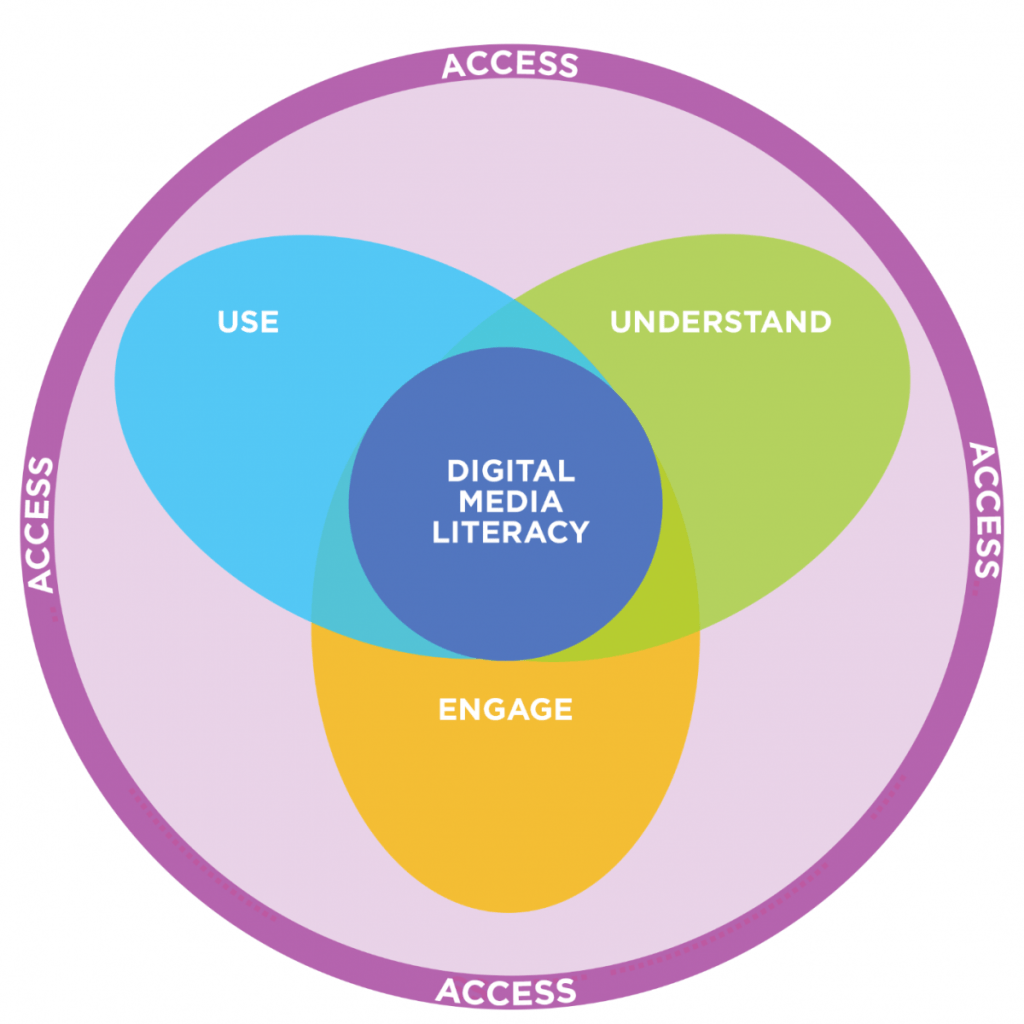
Media literacy has three components: usage, understanding, and engagement. As the diagram below illustrates, everyone has access to media—both traditional and digital. However, an individual’s use, understanding, and engagement with the media they consume promotes a complete and holistic perspective. The diagram below is specific to digital media literacy, but its principles apply to all other mediums. It is an essential reminder that media literacy is not limited to digital or print components; comprehensive information literacy encompasses all media types and promotes consistent engagement.
Why media literacy is important and necessary
Because we are frequently exposed to digital media through mobile devices and laptops, users must be well-informed and educated on how to best engage with it. This is especially relevant for children, university students, and seniors. According to Media Literacy Now, adolescents spend several hours engaging with digital media, such as social media, television, movies, video games, and more. Research shows these numbers increase as children grow up and become adults, highlighting the importance of advanced digital knowledge as they spend more time online.
| Age ranges of children | Average time spent engaging with digital media (ie social media, TV and movies, video games, etc.) |
| Children 2-8 years old | ~2 hours per day |
| Children 8-12 years old | ~4-6 hours per day |
| Adolescents 12 years old and over | ~7-9 hours per day |
Table 1: Using statistics from Media Literacy Now, this table illustrates how much time children and adolescents engage with digital media based on hours per day.
In a child’s development, it is vital that they receive the tools and critical thinking skills needed to distinguish between fact and fiction. If they cannot make these distinctions, it could lead to essential misunderstandings and potentially harmful situations, ultimately negatively impacting their growth. It is important to facilitate digital knowledge and awareness at an early age. In addition, prospective college students and adults will equally benefit, particularly elderly citizens, who are often the target of scams because their online skills are less honed than those of younger individuals, putting them at a higher risk of being tricked or manipulated. Therefore, it is crucial to ensure all members of society learn about the importance of media literacy and receive the tools necessary for identifying false information, resisting potential scams, and ensuring mental safety as they navigate media platforms on the internet and beyond.
Lastly, media literacy is a skill that will become increasingly vital in the coming years, especially with the rapid growth of generative artificial intelligence and the wide circulation of fake news and misinformation. Teachers must incorporate the knowledge and skills to distinguish between fact and fiction. The Harvard Graduate School of Education panel reiterates this need for further education. This framework must become a required learning for all students. If we don’t address critical thinking and media literacy for the next generations now, a content creator’s ability to effectively create, use, engage with, and understand media will decline and lead to significant communication gaps.

 The Mhelting Pot
1 thought on “What is media literacy?”